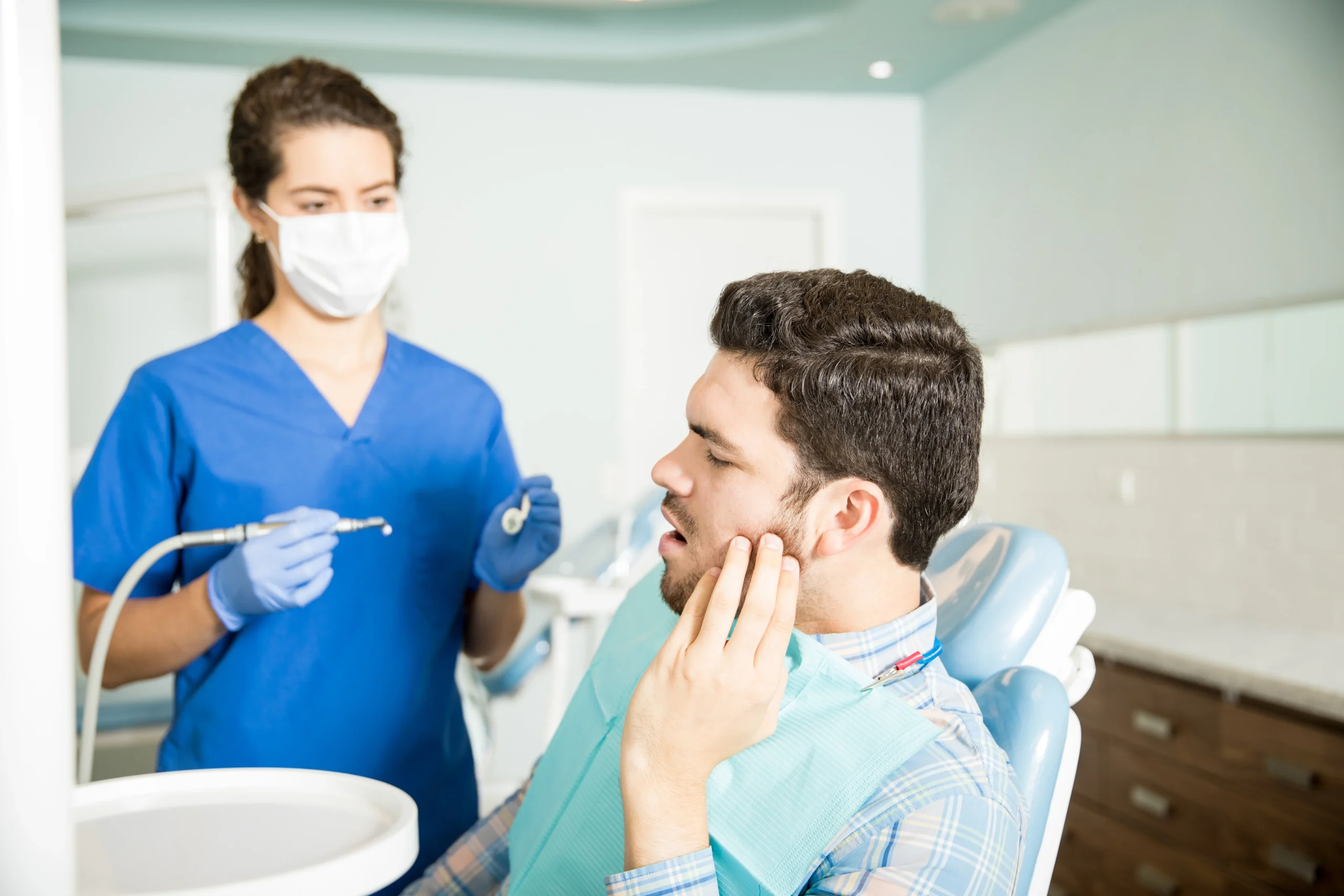
If you’re wondering “Why is my bottom wisdom tooth swollen and what can I do about it?” — the short answer is: swelling often happens because a lower wisdom (third molar) is impacted or partially erupted, and the surrounding gum becomes inflamed or infected. At Tam Dental in Jeddah, our experienced team assesses the situation and offers tailored treatments for foreign residents who seek clear, English-speaking care.
What is an Inflamed Lower Wisdom Tooth?
An inflamed lower wisdom tooth refers to a condition where the gum tissue around the lower third molar becomes red, swollen or infected. Commonly this is the result of:
- Pericoronitis — inflammation of the gum over a partially erupted wisdom tooth.
- An Impacted wisdom teeth — when the tooth cannot fully grow into place, often due to lack of space in the jaw.
- Swollen gum behind the back tooth even if there is no visible wisdom tooth yet—this may signal eruption, infection, or a gum flap situation.
Symptoms you may notice include: red or tender gums behind the last molar, bad taste in the mouth, difficulty opening your jaw, or swelling of the face.
Why Does the Lower Wisdom Tooth Get Inflamed?
Here are the common causes that lead to swelling and inflammation:
- Partial eruption or impaction: When the wisdom tooth is blocked by the neighboring tooth, bone, or gum tissue, it may create a pocket of soft tissue where bacteria thrive.
- Gum flap (operculum): If a flap of gum covers part of the wisdom tooth crown, food and debris can get trapped underneath, leading to infection.
- Insufficient space in the dental arch/jaw: Especially in the lower jaw, space can be limited, causing the wisdom tooth to emerge at an angle or remain partly embedded.
- Poor oral hygiene in the back of the mouth: Hard-to-reach areas make removal of plaque harder, increasing the risk of gum inflammation, tooth decay or pericoronitis.
- Pressure on nerves or adjacent teeth: A wisdom tooth pressing on a nerve or the second molar may also cause discomfort and swelling.
Who Is a Candidate for Treatment?
You should consider evaluation by our team at Tam Dental if you are a foreign resident in Jeddah/Makkah region and you notice any of the following:
- Swelling, redness or tenderness around the lower back tooth (third molar)
- Bad breath, bad taste, or pus discharge behind the last molar
- Difficulty opening your mouth, or jaw stiffness
- Recurring pain in the area, or you know your wisdom tooth has not fully erupted
- You want to avoid complicated issues later (e.g., damage to adjacent teeth, gum disease, or infection).
Even if you don’t currently have significant pain, early assessment is best because complications like gum disease or tooth decay can develop quietly.
Treatment Options at Tam Dental for Lower Wisdom Tooth Issues
At Tam Dental, we assess each case individually and offer a spectrum of treatment options including:
- Cleaning and Local Management:
- Flushing the area to remove trapped food and bacteria.
- Prescribing antibacterial mouthwash and possibly antibiotics in the case of infection.
- Recommendation of enhanced home care (brushing behind molars, special floss/irrigators).
- Operculectomy or Gum Flap Removal:
- When the gum flap is the cause of ongoing inflammation, removing it can improve access and hygiene.
- This is more conservative than extraction and may be suitable if the tooth is likely to erupt properly.
- Wisdom Tooth Extraction:
- If the tooth is impacted, cannot erupt fully, or causes recurrent pericoronitis or damage to adjacent teeth, extraction is often the definitive treatment.
- At Tam Dental, we use modern imaging and surgical planning to minimize discomfort and risks.
- Monitoring & Follow-Up:
- If the wisdom tooth is asymptomatic but at risk (e.g., partial eruption, limited space), our specialists may elect to monitor it closely.
- Retaining the tooth may be possible when the risk is low and hygiene can be managed.
Advice for Maintaining Oral Health with Wisdom Tooth Issues
Professional Tip: If you notice swelling or discomfort around a lower wisdom tooth, don’t delay. Early treatment often prevents more complicated issues such as abscesses, bone loss, or spread of infection.
- Brush and floss diligently, especially around the back of the mouth.
- Use an antiseptic mouth rinse or warm saline if recommended by the dentist.
- Attend regular check-ups, especially if you have wisdom teeth that haven’t fully emerged.
- Avoid overusing hot compresses in swelling cases as they may aggravate the condition.
Why Choose Tam Dental in Jeddah?
When you live in Jeddah or near Makkah and seek care for an inflamed lower wisdom tooth, Tam Dental offers you:
- A highly qualified dental team who trained at top international universities and speak fluent English—ideal for expatriates seeking clear, comprehensive communication.
- Advanced diagnostics including digital X-rays, 3D modelling, and precision planning to ensure your wisdom tooth treatment is safe, efficient and comfortable.
- A patient-centered approach—from initial evaluation to aftercare—ensuring you understand the process and feel confident in your dental journey.
- A full service clinic environment that handles from minor gum flap treatments to surgery and follow-ups in one place.
Schedule Your Consultation
If you’re dealing with a swollen lower wisdom tooth, recurring pain, or want to evaluate whether extraction is needed, book a consultation at Tam Dental in Jeddah. Our experts will review your case, provide clear options (no jargon), and guide you toward the best outcome for your oral health.
FAQs
Why is my bottom wisdom tooth swollen?
The bottom wisdom tooth gets swollen often because it is partially erupted or impacted, creating a flap of gum tissue (operculum) where food and bacteria get trapped and cause inflammation.
What is pericoronitis in kids?
Pericoronitis is the inflammation and infection of gum tissue around a partially erupted tooth—commonly a wisdom tooth. While it more often occurs in late teens/early twenties, children who are erupting late molars may show similar gum swelling. When this happens, better hygiene and evaluation are important to prevent infection.
Can a wisdom tooth cause a headache?
Yes. The inflammation or infection associated with a lower wisdom tooth can spread pain to adjacent areas—jaw, ear, neck—and tension in these regions may lead to headaches. Also, jaw muscle strain due to limited mouth opening can contribute to head discomfort.
Does pericoronitis go away by itself?
Not reliably. While mild inflammation may temporarily ease with home care, without treating the underlying cause (e.g., impacted tooth or gum flap), the condition often recurs or worsens. Professional treatment is strongly recommended.
What symptoms suggest a wisdom tooth infection in early stage?
Early stage symptoms may include mild gum swelling behind the last molar, slight discomfort when biting, bad taste or odor in the mouth, and redness of the gum tissue. These can progress to more serious signs if untreated.