Quick Answer: There are three main types of dental implants — endosteal, subperiosteal, and zygomatic. The most common is the endosteal implant, which is placed directly into the jawbone and provides the strongest, most natural-feeling support for replacement teeth.
When it comes to replacing missing or damaged teeth, dental implants are considered the most durable and natural-looking solution available today. Unlike removable dentures or bridges that rest on top of the gums, implants mimic the natural tooth root, fusing securely with the jawbone. This creates a long-lasting foundation for crowns, bridges, or even full-arch prosthetics.
At Tam Dental in Jeddah, our English-speaking implant specialists—trained at top international universities—use advanced surgical techniques and digital imaging to provide safe, comfortable, and predictable implant placement for foreign residents and locals alike. In this guide, we’ll explain the types of dental implants, when each option is best, what the procedure involves, and how to maintain long-term oral health.
Understanding Dental Implants
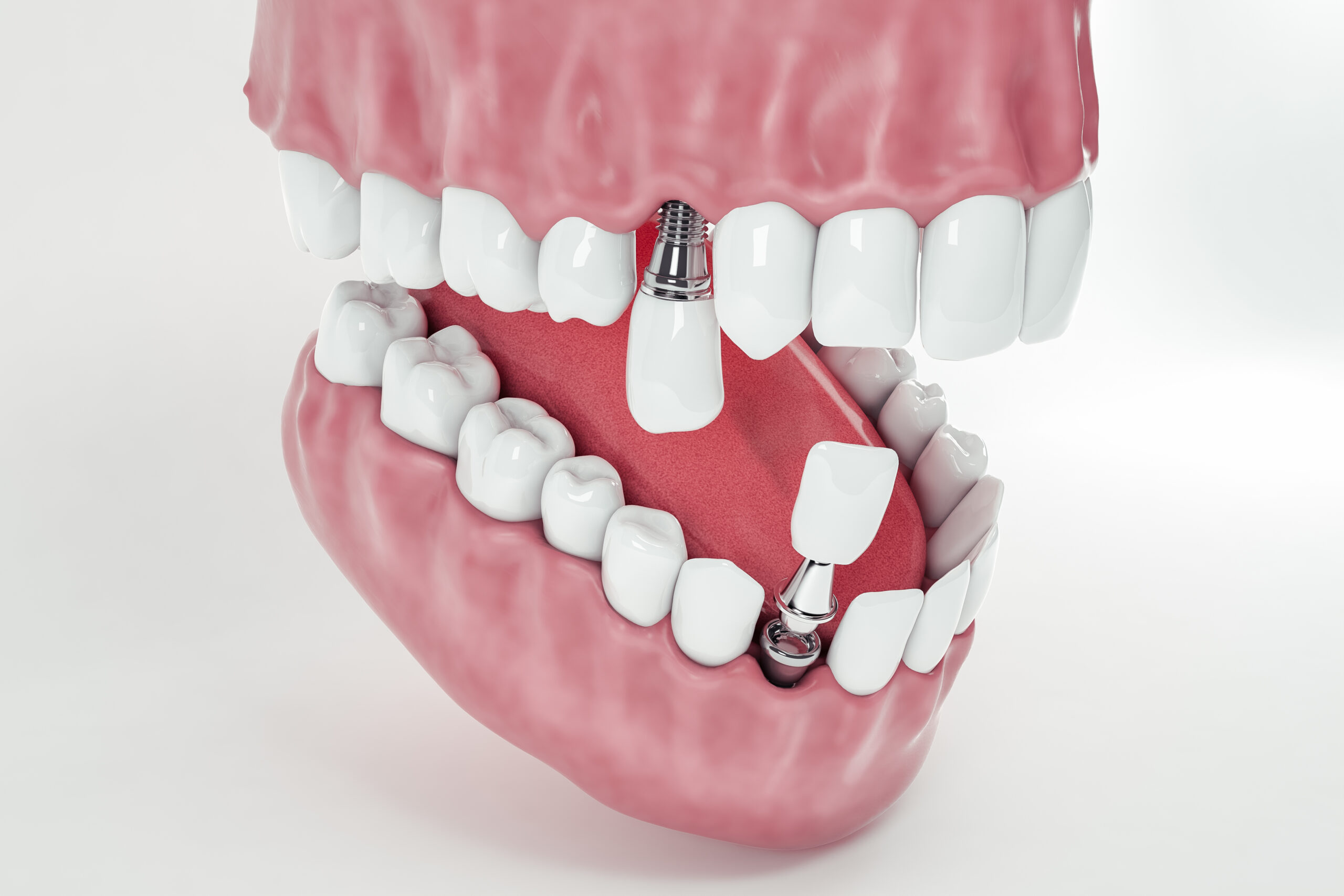
A dental implant is a small titanium or zirconia post that replaces the tooth root. Once placed in the healthy jawbone, it fuses through a natural process called osseointegration, creating a solid anchor for artificial teeth such as crowns or bridges.
Each implant consists of three parts:
- Implant post – acts as the artificial root inserted into the jaw bone.
- Abutment – a connector that attaches to the implant and supports the prosthetic.
- Restoration – the visible crown, bridge, or denture that looks and functions like natural teeth.
This structure allows implants to feel and perform like real teeth, improving not only chewing and speaking but also preventing bone loss and preserving the facial structure.
Types of Dental Implants
1. Endosteal Implants (Most Common Type)
Overview: Endosteal implants are placed directly into the jawbone and are the most widely used implant option today. They are ideal for patients with a healthy, dense jawbone.
Material and Shape: Usually made of titanium, they look like small screws or cylinders.
Procedure: After the implant is surgically placed, the bone is allowed to heal and integrate with the post over several months. Once healed, an abutment and a custom-made crown, bridge or denture are attached to the implant.
Advantages:
- Longest-lasting and most stable option
- Feels and functions like natural teeth
- Prevents bone resorption and supports jaw health
Considerations:
- Requires adequate bone height and width
- Healing takes a few months before final restoration
At Tam Dental, endosteal implants are performed under digital guidance for precise dental implant placement and minimal discomfort.
2. Subperiosteal Implants
Overview: A subperiosteal implant sits on top of the jawbone but beneath the gum tissue. It’s used for patients who lack enough healthy bone and prefer not to undergo a bone graft.
Structure: A custom metal framework is placed under the gums with posts that protrude through the gum to hold the replacement teeth.
Ideal Candidates:
- Patients with bone loss who cannot or do not wish to undergo bone graft procedures
- Those needing a faster implant solution
Advantages:
- Shorter treatment timeline
- Avoids complex grafting surgeries
- Provides better stability than removable dentures
Limitations:
- Less stable than endosteal implants
- May not last as long under heavy biting forces
Subperiosteal implants can be an effective bridge between removable dentures and full bone-integrated implants, especially for older patients.
3. Zygomatic Implants (Advanced Option)
Overview: Zygomatic implants are the least common but are a breakthrough for patients with severe jaw bone loss. Instead of anchoring into the maxilla (upper jaw), these longer implants are anchored into the zygomatic bone—the cheekbone—providing a strong base for new teeth.
Best For: Patients with advanced bone loss in the upper jaw who aren’t candidates for standard implants or grafting.
Advantages:
- Eliminates the need for bone grafts
- Enables same-day fixed teeth in many cases
- Long-term success rates comparable to endosteal implants
At Tam Dental, our oral and maxillofacial surgeon uses advanced 3D imaging to plan zygomatic implant placement with precision, ensuring safe and aesthetic results.
Other Classification Types
Besides their placement location, implants can also be categorized by technique or restoration style:
By Surgical Procedure
- Single-Stage Implants: Placed in one surgical session with the abutment exposed, reducing healing time.
- Two-Stage Implants: The traditional method where the implant is covered by gum tissue during healing, then uncovered for abutment placement later.
By Restoration Type
- Single Tooth Implant: Replaces one missing tooth using one implant and a crown.
- Implant-Supported Bridge: Used for multiple missing teeth, avoiding the need to grind down natural teeth as in a fixed bridge.
- All-on-4 / All-on-6 Implants: Full-arch restoration using four or six implants to anchor a permanent denture.
- Implant-Supported Dentures: Provide a removable but highly stable solution for complete tooth loss.
When Bone Grafting Is Needed
Some patients lack sufficient jaw bone density for implant placement. Bone loss may result from gum disease, tooth extraction without replacement, or long-term denture use.
A bone graft procedure helps rebuild bone mass so the implant can anchor securely. Tam Dental offers advanced grafting materials and guided bone regeneration, ensuring safe healing and better implant success rates.
Implant Materials and Design Options
- Titanium Implants: Biocompatible, lightweight, and strong; fuse naturally with bone.
- Zirconia Implants: Metal-free ceramic option, ideal for patients with metal sensitivities.
Each implant type comes in various designs—threaded, smooth, cylindrical or tapered—depending on bone type and surgical planning.
Choosing the Right Implant Solution
Selecting the correct implant option depends on multiple factors:
- Amount of available jawbone
- Overall oral health and gum condition
- Medical history and healing capacity
- Aesthetic preferences and functional goals
At Tam Dental, every patient begins with a digital 3D scan and personalized consultation to choose the best solution—whether that’s a single implant, bridge, or full-arch fixed restoration.
Our team ensures that every restoration blends seamlessly with your natural teeth, supporting both confidence and long-term oral health.
The Dental Implant Procedure: Step-by-Step
- Consultation & Imaging: A full oral exam, 3D imaging, and evaluation of bone density.
- Treatment Planning: Your dentist or oral surgeon customizes the surgical guide and implant plan.
- Implant Placement: Performed under local anesthesia or sedation for complete comfort.
- Healing & Osseointegration: Over 3–6 months, the implant fuses with the bone.
- Abutment & Restoration: After healing, a crown, bridge or denture is attached to the implant for full function.
Each stage is monitored closely at Tam Dental, ensuring safety and optimal healing.
Benefits of Dental Implants
- Restores full chewing function and speech clarity
- Prevents bone loss and gum tissue collapse
- Preserves adjacent natural teeth (no cutting like in bridges)
- Enhances facial aesthetics and self-confidence
- Long-term stability with proper oral hygiene
Maintaining Oral Health After Implants
- Brush twice daily with a soft toothbrush and fluoride toothpaste.
- Floss or use interdental brushes around the implants.
- Schedule professional cleanings every six months.
- Avoid smoking and excessive alcohol—both hinder healing.
- Protect your implants with a night guard if you grind your teeth.
With consistent care, implants can last 15–25 years or more.
Why Choose Tam Dental in Jeddah
Tam Dental is a leading multidisciplinary clinic in Jeddah offering international-standard implantology services. Our surgeons and prosthodontists hold degrees from top universities abroad and communicate fluently in English—ensuring seamless understanding for expatriate patients.
We focus on advanced implant solutions for both functional and cosmetic restoration using:
- State-of-the-art digital planning and 3D guided surgery
- High-quality implant systems from global brands
- Comfortable anesthesia and sedation options
- Comprehensive care from bone graft to final crown
At Tam Dental, we don’t just replace missing teeth — we restore your confidence, your smile, and your oral health.
Professional Advice
If you’ve lost one or more teeth, don’t delay treatment. Bone loss progresses quickly after extraction, making later implant placement more difficult. An early consultation helps preserve your jaw structure and opens the door to more implant options.
FAQs
What are the main types of dental implants?
The three main types are endosteal, subperiosteal, and zygomatic implants, with endosteal being the most common.
Which type of implant lasts the longest?
Endosteal implants, when placed in a healthy jawbone and cared for properly, can last 20 years or more.
What is a subperiosteal implant used for?
It’s used when there isn’t enough bone height or the patient prefers to avoid bone grafting.
Can implants replace multiple teeth?
Yes. Implants can support bridges or even full dentures, restoring full function and aesthetics.
Are dental implants safe?
Absolutely. When placed by a skilled oral and maxillofacial surgeon, implants are one of the safest and most predictable surgical procedures in modern dentistry.