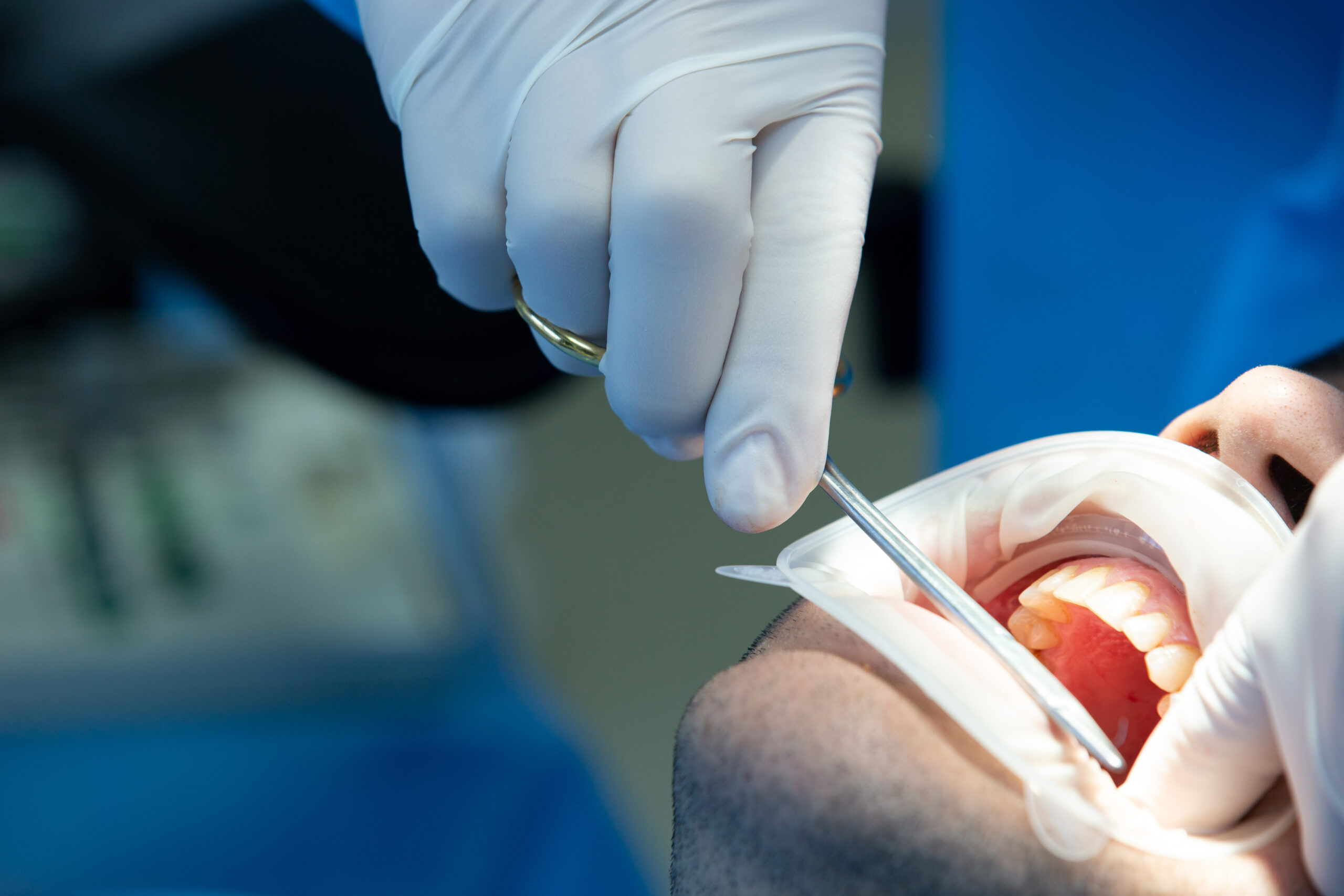
A filling does not have one set price in Saudi Arabia. What you pay depends mostly on the tooth: how big the cavity is, where it sits in your mouth, which material is used, and how many surfaces of the tooth need repair. A small white filling on a front tooth is a quicker, simpler job than a large one on a back molar that takes the full force of chewing — and that difference shows up in the cost.
We see this every week in our clinic, so rather than quote you a number that may not match your mouth, here is an honest breakdown of what drives the cost, the filling options available in Saudi Arabia, and the answers to the questions patients ask us most. You will not find a fixed figure on this page, because a reliable one only comes from a dentist actually looking at the tooth and the X-ray.
What affects the cost of a dental filling in Saudi Arabia?
Most of what moves the price comes back to how much work the tooth needs.
The size and location of the cavity. A small area of decay caught early is a short, straightforward filling. A large cavity, or one on a back tooth that is harder to reach and under heavy chewing load, takes more time and material.
The material you choose. Silver (amalgam) fillings are generally the most economical; tooth-colored composite and lab-made porcelain cost more because of the materials and the technique involved.¹ ² The options are explained in the next section.
How many fillings (and surfaces). Cost is usually worked out per tooth and per surface, so one small filling and several across different teeth are very different totals.
Direct vs. indirect fillings. A standard filling is placed directly in the tooth in one visit. When a tooth is too damaged for a simple filling but not damaged enough for a crown, a dentist may use an inlay or onlay — a custom piece made in a lab — which usually means two visits and a higher cost.¹ These sit in the territory of dental restorations rather than a basic filling.
How deep the decay has gone. If decay has reached the nerve inside the tooth, a filling alone will not solve it and you may need root canal treatment first.¹ This is the strongest reason not to delay: a small cavity treated now is far simpler and cheaper than the same cavity left to grow.
Diagnostics. A proper exam and an X-ray to see the full extent of the decay are part of doing the job correctly, not optional extras.
What are the main types of dental fillings?
Fillings fall into two groups: direct (placed straight into the tooth in one visit) and indirect (made in a lab and fitted afterward).¹ The materials you are most likely to be offered are:
Amalgam (silver) fillings — a durable mix of metals (silver, tin, copper, and mercury) that has been used for generations. They are strong, hard-wearing, and the most affordable option, which makes them a common choice for large cavities in the back teeth.¹ ² They are silver in color, so they show.
Composite (tooth-colored) fillings — a resin mixed with fine glass particles that is matched to your tooth color and bonded into place, then hardened with a curing light.¹ They look natural and preserve tooth structure, which is why most people choose them for visible teeth.
Glass ionomer — another tooth-colored material, often used for smaller fillings or for children.¹
Indirect fillings (inlays and onlays) — custom pieces made from porcelain or gold for teeth with more damage than a simple filling can handle.¹ Porcelain matches the tooth; gold is extremely durable but visible.
Which one suits you depends on where the tooth is, how big the cavity is, and your own preference — not on price alone.
How long does a dental filling last?
A well-placed filling can last a long time — commonly 10 to 20 years, depending on the material, the tooth, and how you care for it.¹ Silver amalgam tends to outlast tooth-colored composite: one body of research put the average lifetime of a silver filling at around eleven years versus about six for a tooth-colored one, and found composite fillings were roughly twice as likely to fail or develop new decay at the edges.² ³
No filling is permanent, though. Years of chewing, plus grinding or clenching, eventually wear any filling down, which is why your dentist checks your existing fillings at routine visits and replaces them before a small problem becomes a big one.² Good home care and regular check-ups are what get you to the longer end of that range.
Is getting a filling painful?
It should not be. Before starting, the dentist numbs the tooth with local anesthesia, so you should not feel pain during the procedure itself — and if you do feel anything, you tell the dentist and they top up the numbing.⁴ For anxious patients, sedation options exist too.
Afterward, it is normal to have some mild sensitivity or gum soreness around the tooth for a week or two as it settles, and a simple over-the-counter pain reliever handles it.⁴ What is not normal is a throbbing toothache, pain when biting, or sharp pain to hot and cold that lingers — if that happens, call your dentist, because it can mean the bite needs adjusting or the decay went deeper than a filling can fix.⁴
Can I eat after a dental filling?
Yes. A tooth-colored filling is hardened with a curing light before you leave, and a silver one sets quickly, so eating will not damage a properly placed filling.⁴ The one practical tip: wait until the numbness wears off before you eat, so you do not accidentally bite your cheek or tongue. When you do eat, start with something soft and chew on the other side for the first little while if the tooth feels sensitive.
Are tooth-colored fillings better than silver ones?
Neither is “better” across the board — they are good at different things, and the right choice depends on the tooth.
Tooth-colored composite wins on appearance: it blends in, bonds to the tooth, and is the natural choice for front teeth and anywhere a filling would show.¹ The trade-off is that it tends not to last as long as silver and can be more prone to wear and new decay at the edges, especially in large fillings.² ³
Silver amalgam wins on durability and cost: it is strong and hard-wearing, which makes it a sensible option for large cavities in the back teeth where chewing force is highest, and it is the more economical material.¹ ² Its drawbacks are that it is visible and that, while the ADA and FDA consider amalgam safe for the general population, the FDA advises that certain groups — including pregnant or breastfeeding women, young children, and people with specific health conditions — avoid new amalgam fillings where possible.⁴ The FDA does not recommend removing existing amalgam fillings that are in good condition.⁴
In practice, this is a conversation to have with your dentist, who weighs the position of the tooth, the size of the cavity, your health, and your preference before recommending one.
Who we are — about Tam Dental
If you do not know us yet: Tam Dental is an institutional dental clinic in Jeddah where everyday care like fillings sits alongside every major dental specialty under one roof. Fillings are part of our general dentistry, and if a tooth turns out to need more — a root canal, a crown, or a lab-made restoration — the specialist who handles it is part of the same team, working from the same records. As a clinic we bring more than fifteen years of experience and have cared for over 5,000 patients, with a multilingual staff used to looking after Jeddah’s expat families. What matters most to us is being straight with you: telling you honestly whether a tooth needs a filling now, which material genuinely suits it, and what the realistic cost is once we have looked.
How to get an accurate price for your filling
Because the cost is built from your specific tooth, the practical next step is a quick assessment, not a phone quote. The easiest way to start with us is an online consultation — currently offered with a discount — where a dentist reviews your situation and explains your options and what affects your particular cost. You are also welcome to call the clinic or visit us in person. A short exam and X-ray replace guesswork with a clear answer.
Frequently asked questions
What affects the cost of a dental filling in Saudi Arabia?
Mainly the size and location of the cavity, the filling material you choose, how many teeth and surfaces are involved, and whether a simple direct filling is enough or the tooth needs a lab-made inlay/onlay or a root canal first.¹ Small cavities caught early are the simplest and cheapest to treat.
What are the main types of dental fillings?
Silver amalgam (durable and economical), tooth-colored composite (natural-looking and bonded to the tooth), glass ionomer (often for small fillings or children), and lab-made porcelain or gold inlays and onlays for more damaged teeth.¹
How long does a dental filling last?
Commonly 10 to 20 years depending on the material and care.¹ Silver fillings tend to last longer than tooth-colored ones — roughly eleven years versus about six in one body of research — and no filling is permanent.² ³
Is getting a filling painful?
It shouldn’t be. The dentist numbs the tooth with local anesthesia first, so you shouldn’t feel pain during the procedure; mild sensitivity for a week or two afterward is normal and settles with a simple pain reliever.⁴
Can I eat after a dental filling?
Yes — the filling is set before you leave, so eating won’t harm it. It’s best to wait until the numbness wears off so you don’t bite your cheek, then start gently if the tooth feels sensitive.⁴
Are tooth-colored fillings better than silver ones?
Neither is better overall. Tooth-colored composite looks natural and suits visible teeth; silver amalgam is more durable and economical for large back-tooth cavities.¹ ² The right choice depends on the tooth and is best decided with your dentist.
Sources
- Cleveland Clinic — Dental Fillings: Types, Materials & What They’re For (direct vs indirect fillings, materials, procedure, 10–20 year lifespan): https://my.clevelandclinic.org/health/treatments/17002-dental-fillings
- American Dental Association (MouthHealthy) — Dental Filling Options (amalgam durability/cost vs tooth-colored aesthetics; back-teeth use): https://www.mouthhealthy.org/all-topics-a-z/dental-filling-options
- Journal of the American Dental Association — Silver-colored vs tooth-colored fillings (estimated lifetimes ~11 vs ~6 years; tooth-colored ~twice as likely to develop new edge decay): https://jada.ada.org/article/S0002-8177(23)00113-7/fulltext
- Cleveland Clinic — Dental Fillings (local anesthesia/pain, normal sensitivity afterward, eating after a filling, amalgam safety and FDA guidance): https://my.clevelandclinic.org/health/treatments/17002-dental-fillings