What Is Invisalign?
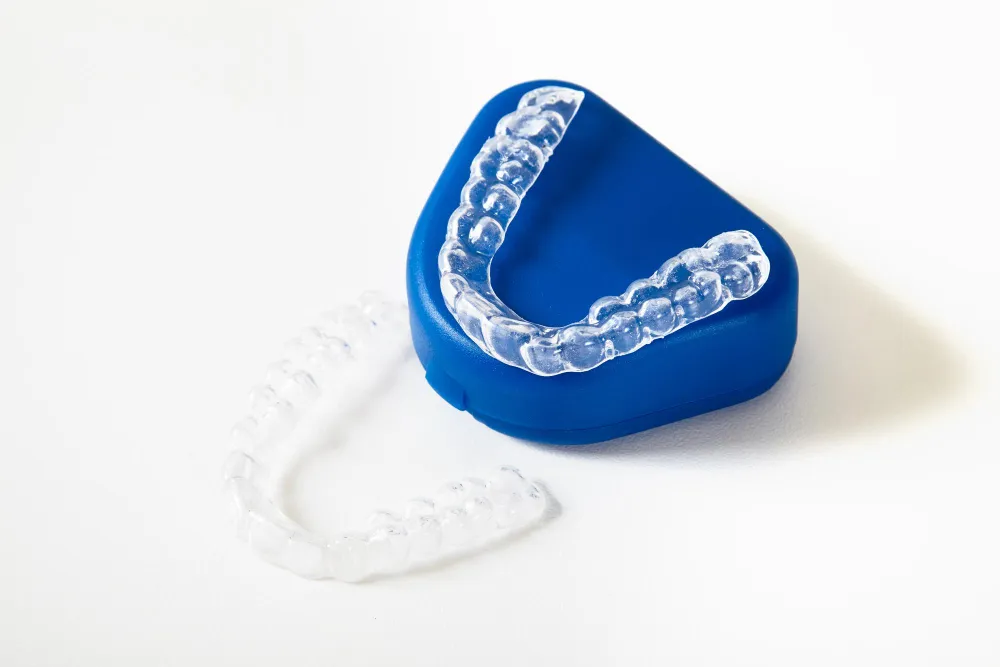
Invisalign is a brand of clear aligner. “Invisible braces” and “Invisalign braces” are everyday names for the same idea: a series of thin, clear, custom-made trays that fit over your teeth and move them a little at a time.¹
Each tray is worn for one to two weeks before you change to the next in the series, and trays need to be worn for at least 22 hours a day.¹ ² You take them out to eat, to drink anything other than water, and to brush and floss.¹
Clear aligners most often treat gapped teeth, crowded or crooked teeth, overbite, underbite, open bite and crossbite.¹ They are not right for every case. An orthodontist may recommend aligners, fixed braces, or a combination, depending on what your teeth need.¹
Invisalign vs Braces: An Easy Comparison
| Invisalign (clear aligners) | Fixed braces | |
|---|---|---|
| Visibility | Very hard to see | Visible; ceramic brackets are less noticeable |
| Removable | Yes, for eating and cleaning | No |
| What it depends on | Wearing the trays at least 22 hours a day² | Keeping brackets clean and avoiding hard foods |
| Cases it suits | Light to moderate alignment problems in most cases³ | Almost all cases, including complex ones |
| Speed | Often slower for the same movement³ | Tends to move teeth faster³ |
Neither is better for everyone. If your case is complex, fixed braces may give a more predictable result, and your orthodontist will tell you so. We compare the two in more detail in Clear Aligners vs Braces.
Invisalign Before and After: What Actually Changes
Before-and-after photos show the part of treatment you can see: crowded teeth lined up, gaps closed, front teeth brought back into the arch. They do not show the bite, which is the part your orthodontist spends most of the time on.
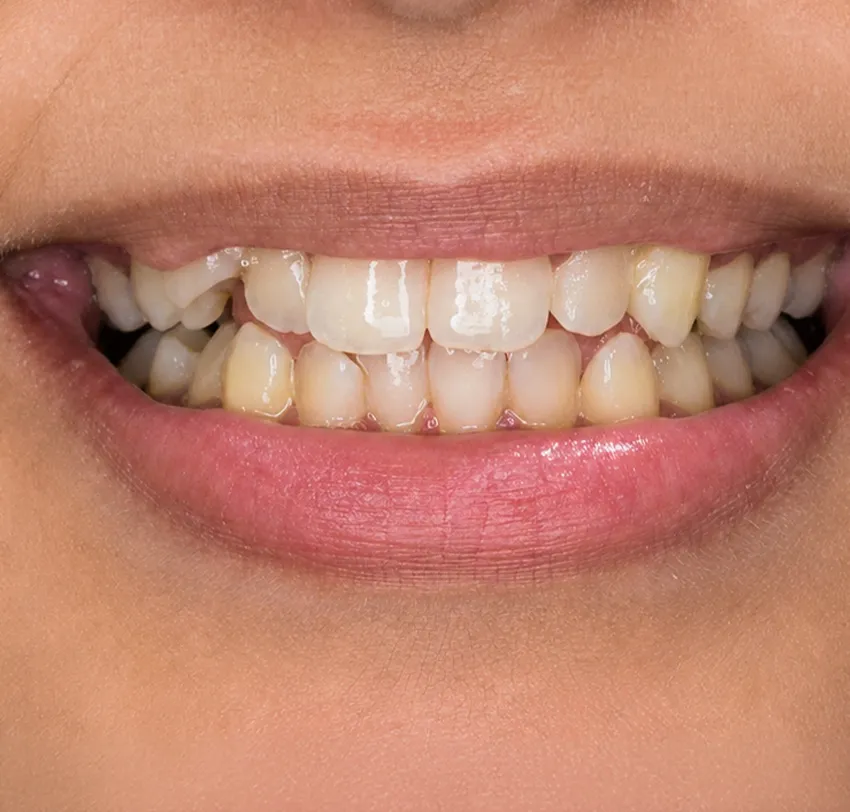
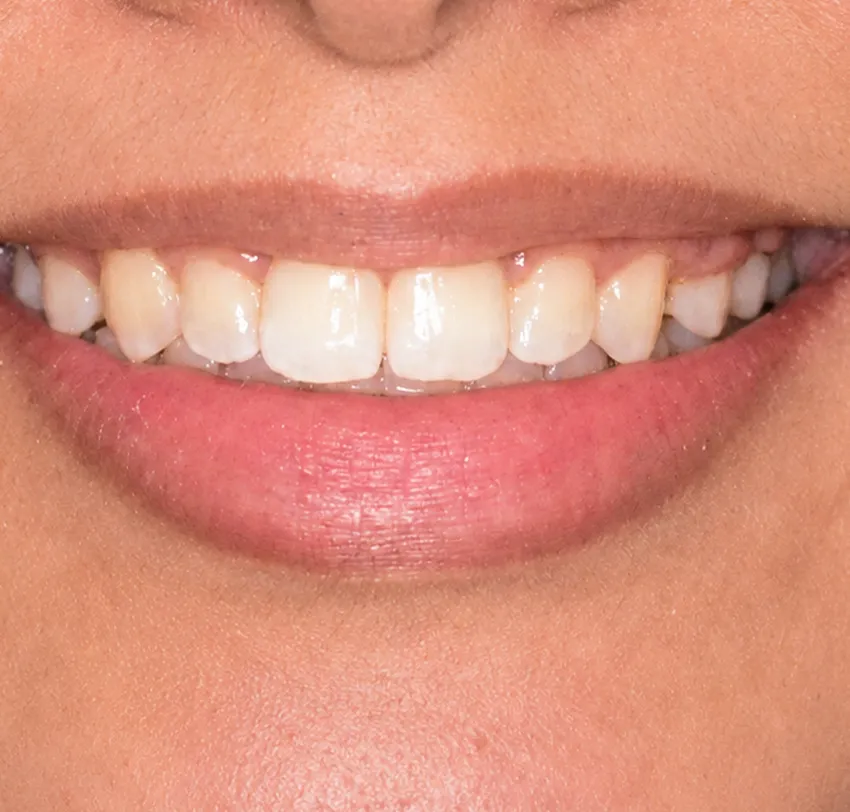
When you look at Invisalign before and after photos:
- look for a case like yours, not the most dramatic result
- ask how long that treatment took and how many sets of aligners it needed
- ask whether attachments, elastics or a short phase of braces were used
- remember the result only holds if a retainer is worn afterwards⁴
Your own “after” depends on your bite, the amount of crowding or spacing, the health of your gums, and how consistently you wear the aligners.
Invisalign Near Me: Finding a Provider in Jeddah
Searching “Invisalign near me” brings up many clinics. Three checks help you choose:
- Who plans the case? Aligner treatment depends on planning. Ask whether an orthodontist plans and supervises your treatment.
- Is the provider listed by the manufacturer? Invisalign publishes its certified providers, so you can check a name yourself.
- How is the case planned? A digital scan gives the 3D model that the aligners are designed from.
At Tam Dental, clear aligner cases are planned from a digital intraoral scan. The clinic was recognised by Invisalign at its MEA Awards 2026, and orthodontist Dr. Abdulelah Alsqir holds APEX status for 2026–2027, which places him in the top 1% of Invisalign providers in the Middle East and Africa by the manufacturer’s own ranking. The tier reflects the number of aligner cases a clinician plans each year. It is a measure of experience with this system and not a promise of a result. The details are in Tam Dental recognised by Invisalign.
The clinic has treated more than 1,000 clear aligner cases.
FAQ
Is Invisalign the same as invisible braces?
Invisalign is one brand of clear aligner. “Invisible braces” is a general name that can also mean other aligner brands, ceramic braces or lingual braces.³
How many hours a day do I wear Invisalign?
At least 22 hours a day.¹ ² You remove the trays only to eat, drink and clean your teeth.
How long does Invisalign take?
It varies with the movements your teeth need.¹ Your orthodontist gives you an estimate after the scan and examination.
Can Invisalign fix an overbite?
Overbite is among the problems clear aligners commonly treat.¹ Whether aligners are enough for your overbite depends on its cause and severity.
Do I need a retainer after Invisalign?
Yes. Everyone who has orthodontic treatment needs a retainer afterwards to keep the teeth in their new position.⁴
Medically reviewed by: Dr. Abdulelah Alsqir, Orthodontic Specialist (University of Leeds).
Sources
- American Association of Orthodontists — Clear Aligners — https://aaoinfo.org/treatments/aligners/
- Cleveland Clinic — Braces: Types & How They Work — https://my.clevelandclinic.org/health/treatments/24601-teeth-braces
- American Association of Orthodontists — How Do Braces Work? — https://aaoinfo.org/treatments/braces/
- American Association of Orthodontists — Orthodontic Retainers — https://aaoinfo.org/treatments/retainers/