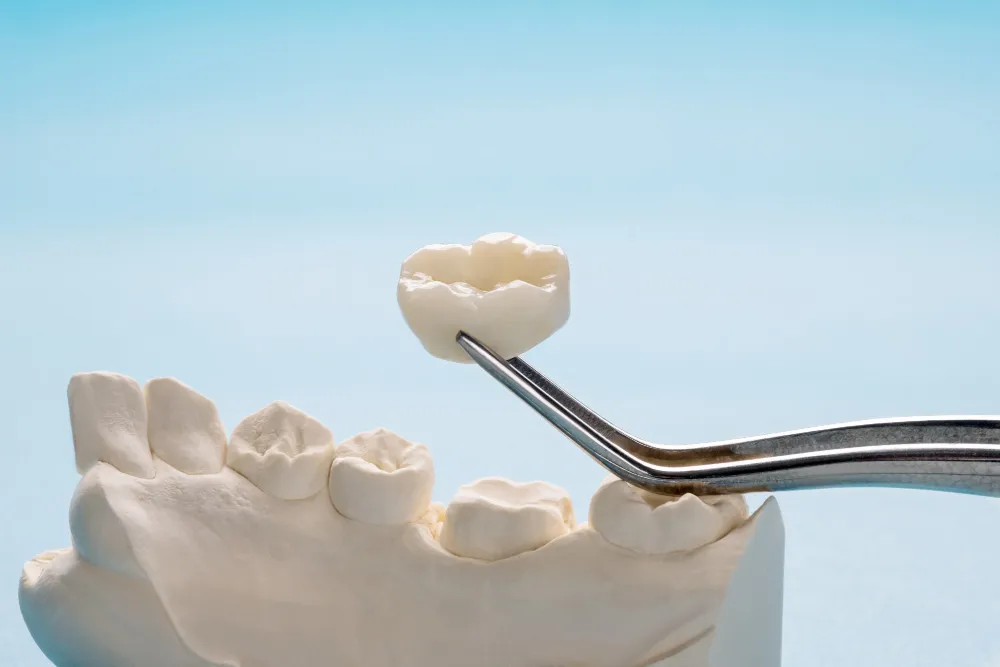
A zirconia crown is a tooth-shaped cap made from zirconium dioxide, a white ceramic. It covers the whole tooth to restore its shape and strength, and it contains no metal.¹ Zirconia is among the most durable ceramic crown materials and can take heavier biting forces than other ceramics, which is why dentists often choose it for back teeth.¹
Whether it is the right crown for you depends on which tooth is being restored, how you bite, and how much of the tooth is left.
When do you need a crown at all?
A crown is used when a filling is no longer enough. Dentists recommend one to:²
- strengthen a tooth with a large filling and little tooth structure left
- protect a weak tooth from breaking, or restore one that has already broken
- cover a tooth that is discoloured or badly shaped
- cover a dental implant
- hold a bridge in place
Teeth that have had root canal treatment are also commonly crowned.¹
What makes zirconia different
Ceramic crowns can be made from several materials, and zirconium dioxide is one of the most widely used.¹ Three properties set it apart:
- Strength. Zirconia crowns withstand heavier forces than other types of ceramic crown.¹
- Kind to the opposing tooth. They are gentle on the teeth they bite against, so those teeth wear less.¹
- No metal. There is no metal edge to show at the gum line, and all-ceramic crowns are a good choice for people with metal allergies.¹
Types of zirconia crown
- Monolithic (solid) zirconia is milled from a single block. It is the strongest form and is usually chosen for molars.
- Layered zirconia has a zirconia core with porcelain layered on top for a more natural, translucent look. It is used where appearance matters most, with the trade-off that the porcelain layer can chip.
- High-translucency zirconia lets more light through than standard zirconia and is used on front teeth.
Your prosthodontist chooses between them based on the position of the tooth and the forces on it.
PFM crown vs zirconia
A porcelain-fused-to-metal (PFM) crown has a metal core covered in porcelain. It combines the durability of metal with a tooth-coloured surface.¹
| Zirconia crown | PFM crown | |
|---|---|---|
| Material | All ceramic, no metal | Metal core with porcelain on top |
| Appearance | Tooth-coloured throughout | Tooth-coloured, but metal can show if the porcelain chips or the gum recedes |
| Chipping | Solid zirconia has no surface layer to chip | The porcelain coating may chip over time and expose the metal¹ |
| Wear on the opposing tooth | Gentle on opposing teeth¹ | May gradually wear the enamel of opposing teeth¹ |
| Metal allergy | Suitable¹ | Contains metal |
PFM crowns still have a place. They have a long clinical record and can restore both front and back teeth.¹ If your dentist recommends one, ask why it suits your case better.
Zirconia crown and bridge
Zirconia is also used for bridges. A bridge replaces a missing tooth with a false tooth held by crowns on the teeth either side, and a zirconia bridge is milled as one connected piece. The neighbouring teeth have to be strong enough to carry it. If you are weighing a bridge against an implant, see Dental Bridge vs Dental Implant.
How a zirconia crown is fitted
- Preparation. The dentist removes some enamel to make room for the crown and may build up the tooth with filling material to create a strong base.¹
- Impression. A digital scan or a physical impression records the shape of the tooth.¹
- Temporary crown. A lab usually needs two to three weeks to make the final crown, and you wear a temporary one in the meantime.¹
- Fitting. At the second visit the dentist checks the fit and bite, then bonds the crown with dental cement.¹
How long does a zirconia crown last?
Dental crowns last between five and 15 years on average with proper care, and some last much longer.¹ What shortens that is grinding, biting hard objects, and decay or gum disease at the edge of the crown. Brush twice a day, clean between your teeth daily, and keep your check-ups. We cover the wider question in how long a dental prosthesis lasts.
What affects zirconia crown price
We do not publish prices, because the cost of a zirconia crown depends on the case:
- the type of zirconia (solid, layered or high-translucency)
- whether the tooth needs a build-up, a post, or root canal treatment first
- how many crowns are being made, and whether they form a bridge
- whether the crown sits on a natural tooth or on an implant
- the experience of the dentist and the dental lab
You get an exact figure after an examination and X-ray, before any tooth is prepared.
Is zirconia right for a front tooth?
It can be. High-translucency or layered zirconia is used on front teeth, and other all-ceramic materials are an option too. For one front tooth, matching the neighbouring teeth is the hard part, and the choice of material follows from that. Our guide to dental crowns in front teeth goes through the options.
Zirconia crowns at Tam Dental
Crowns and bridges at Tam Dental are planned by prosthodontists, including consultants trained at Boston University and Rutgers and certified by the American Board of Prosthodontics. Teeth are recorded with a digital scan where the case allows.
Book an online consultation with a discount, call 920033363, or visit the clinic in Ash Shati, Jeddah.
FAQ
Is a zirconia crown better than porcelain?
Zirconia is stronger than other ceramic crown materials and gentler on opposing teeth.¹ Other ceramics can look more translucent on front teeth. The better choice depends on the tooth.
Can a zirconia crown break?
It is very durable, but no crown is unbreakable. Grinding and biting hard objects are the usual causes of damage.
Does getting a zirconia crown hurt?
The tooth is prepared under local anaesthetic. Some sensitivity for a few days afterwards is common.
Can a zirconia crown be whitened?
No. Whitening does not change the colour of a crown. If you plan to whiten your teeth, do it before the crown is made so the shade can be matched.
How many visits does a zirconia crown need?
Usually two: one to prepare the tooth and take the impression, and one to fit the crown, with a temporary crown in between.¹
Is zirconia safe if I have a metal allergy?
All-ceramic crowns, including zirconia, are a good choice for people with metal allergies.¹
Medically reviewed by: Dr. Adnan Nasir, Consultant in Prosthodontics (Boston University; American Board of Prosthodontics).
Sources
- Cleveland Clinic — Dental Crowns: Types, Procedure & Care — https://my.clevelandclinic.org/health/treatments/10923-dental-crowns
- American Dental Association, MouthHealthy — Crowns — https://www.mouthhealthy.org/all-topics-a-z/crowns