
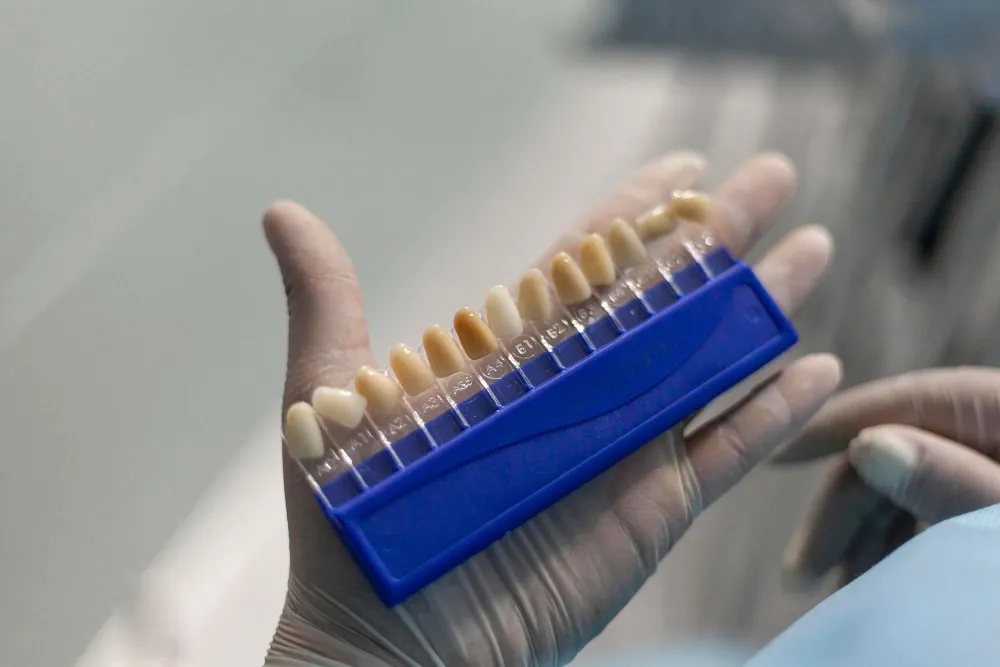
There is no single price for porcelain veneers, because no two cases involve the same work. Porcelain veneers cost depends on five things: how many teeth are treated, the type of veneer, the laboratory work, any treatment your teeth need first, and who does the work. A figure given before an examination is an estimate at best.
This guide explains each factor, so that when you compare veneers prices in KSA you are comparing the same thing.
What you are paying for
A porcelain veneer is a thin shell, custom-made to fit the front surface of a tooth. Porcelain veneers are strong, long-lasting and natural-looking, and they tend to be the more expensive type of veneer.¹
The fee covers more than the shell itself: planning, preparing the teeth, the lab that makes each veneer, fitting, and follow-up.
The factors that decide teeth veneers cost
1. How many teeth
Veneers are priced per tooth. A single veneer to match one damaged tooth, six across the front, and a full smile of ten or more are three very different treatments. The number is decided by how wide your smile is and what you want to change.
2. The type of veneer
- Porcelain veneers are made in a lab. A small amount of enamel is removed first so they sit properly.² They resist stains well and last 10 to 15 years on average with proper care.²
- Composite veneers are built from tooth-coloured resin. They may need less enamel removed and fewer visits, and they are easier to repair, but they are less resistant to stains and wear.¹ They cost less at the start.
- No-prep or minimal-prep veneers need less enamel removal, though still some, and they do not suit everyone.²
A lower price often means a different material. Ask which type a quote is for.
3. The laboratory and the ceramist
Each porcelain veneer is made by hand or milled and finished by a dental technician. The quality of the porcelain and the skill of the ceramist decide how natural the result looks. This is one of the biggest differences between two quotes that look alike on paper.
4. Treatment your teeth need first
Decay and gum disease have to be treated before veneers are placed. Putting veneers over unhealthy teeth can make existing problems worse.¹ Depending on your mouth, the plan may also include whitening the other teeth, reshaping the gum line, or orthodontics to line the teeth up first. Each adds to the total, and each makes the veneers last longer. We cover the gum question in Can you get veneers or implants with gum disease?
5. Planning and preview
Digital scans, a digital smile design and a trial mock-up let you see the result before your teeth are prepared. Not every clinic includes this step. It adds cost, and it lowers the chance of a result you did not expect.
6. Who does the work
Veneers are irreversible, because enamel is removed to place them.¹ The dentist’s training matters. A prosthodontist is the specialist in this kind of restorative and cosmetic work.
7. Aftercare
Ask what is included after fitting: review visits, adjustments, and a night guard if you grind your teeth. People who clench or grind, or who have a deep overbite, may not be good candidates for veneers at all.¹
Why veneers prices differ so much between clinics
When two clinics quote very different amounts, the reason is usually one of these:
- one quote is for composite and the other for porcelain
- the number of teeth is different
- one includes preparatory treatment and the other does not
- the lab and materials are different
- one is a specialist-led plan with a preview stage
Put the quotes side by side on these points before you compare the totals.
Looking at cost over time
The price on the day is only part of the cost. Porcelain veneers last 10 to 15 years on average with proper care.² A cheaper option that needs replacing sooner can cost more over the same period. We go through what shortens and lengthens their life in How long do veneers last?
A warning about very low prices
Veneers should be placed by a licensed dentist. Veneer services from unlicensed providers carry risks of infection and nerve damage, and veneers may be placed over unhealthy teeth without anyone noticing.¹ If a price looks too low, ask who is doing the work and what material is being used.
Is the cost covered by insurance?
Veneers are usually treated as cosmetic. Check your own policy, and ask the clinic whether any part of your plan, such as treating decay or gum disease first, is covered.
Questions to ask before you accept a quote
- Is this for porcelain or composite veneers?
- How many teeth does it cover?
- What treatment do I need first, and is it included?
- Will I see a preview before my teeth are prepared?
- Who is the dentist, and what is their specialty?
- What follow-up is included, and what happens if a veneer chips or comes off?
How to find out your porcelain veneers price at Tam Dental
Veneers at Tam Dental are planned by prosthodontists and cosmetic dentists, including consultants trained at Boston University. The clinic has completed more than 800 smile makeover cases. Your plan and its cost are set out after an examination, X-rays and a discussion of what you want to change, and before any tooth is prepared. If you are considering a full smile change, our Hollywood smile guide explains how the stages fit together.
Book an online consultation with a discount, call 920033363, or visit us at Tam Dental King Road Tower or Tam Dental Sari Branch, Jeddah.
FAQ
How much do porcelain veneers cost?
It depends on the number of teeth, the type of veneer, the lab work and any treatment needed first. You get an exact figure after an examination.
Why are porcelain veneers more expensive than composite?
Porcelain veneers are custom-made in a lab and are stronger and longer-lasting. Composite veneers are made from filling material and need fewer visits.¹
Do veneers need replacing?
Yes, eventually. Porcelain veneers last 10 to 15 years on average with proper care.²
Can I get veneers on just two or four teeth?
Yes. The number depends on what you want to change and how the veneers will match your other teeth.
Are veneers reversible?
No. Enamel is removed to place them, so the treatment is not reversible.¹
Does a higher price mean a better result?
Not automatically. Compare the material, the lab, the planning and the dentist’s training, not the total alone.
Medically reviewed by: Dr. Shatha Alshali, Consultant in Prosthodontics and Cosmetic Dentistry (Boston University).
Sources
- American Dental Association, MouthHealthy — Veneers — https://www.mouthhealthy.org/all-topics-a-z/veneers
- Cleveland Clinic — Dental Veneers — https://my.clevelandclinic.org/health/treatments/23522-dental-veneers