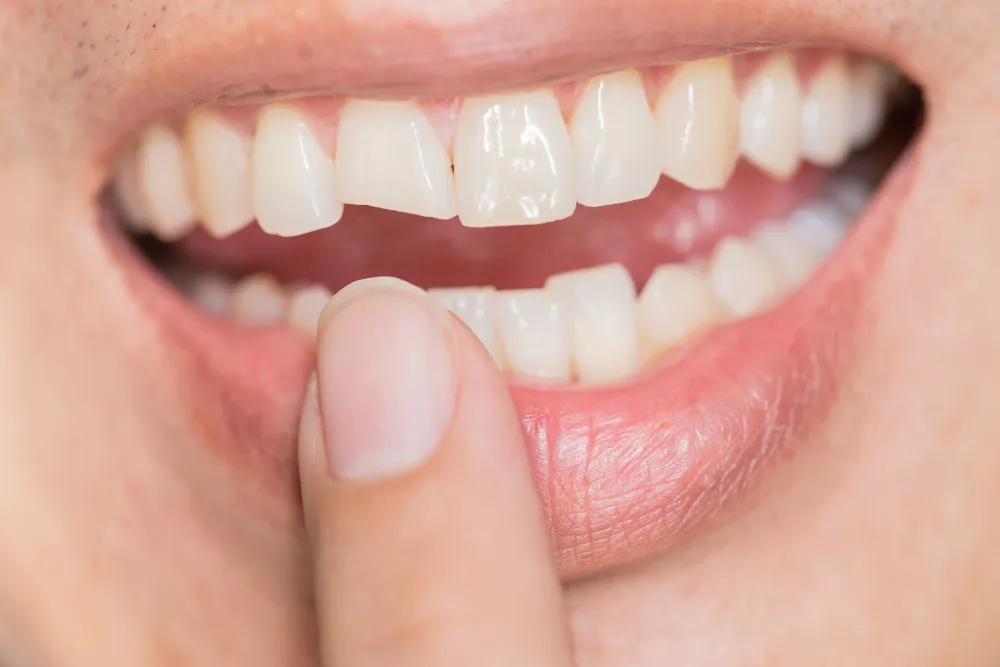
Dental bonding is a cosmetic treatment in which a dentist applies tooth-coloured composite resin to a tooth, shapes it, and hardens it with a light. It is used to repair chips, close small gaps, and change the shape or colour of a tooth.¹ It usually takes one visit and typically needs no enamel to be removed.¹
It is the lightest-touch way to change how a tooth looks. It is also the least durable, so it suits small corrections better than a full smile change.
What can cosmetic dental bonding fix?
Bonding, also called composite bonding or teeth bonding, can hide a range of imperfections:¹
- a chipped or cracked edge
- a small gap between teeth
- a tooth that is slightly too short or uneven
- a stain or discoloured patch that whitening has not shifted
It is meant for small cosmetic changes. For a more dramatic change, other treatments such as porcelain veneers may be needed.¹
Bonding is done on healthy teeth. Decay or gum disease is treated first.¹
How is dental bonding done?
- Shade. The dentist picks a resin colour to match your teeth.
- Preparation. The tooth surface is roughened and coated with a conditioning liquid so the resin sticks.¹
- Application. The resin is applied and shaped by hand.
- Curing. A special light hardens the resin and bonds it to the tooth.¹
- Finishing. The dentist trims and polishes it to match the rest of the tooth.
Anaesthetic is often not needed. There is no downtime, and you can go back to normal activities as soon as you leave.¹ Some people notice short-term sensitivity afterwards.¹
If a bonded tooth feels odd when you bite, or you can feel a sharp edge, call your dentist. It is a quick adjustment.¹
How long does dental bonding last?
Bonding material typically lasts between three and 10 years before it needs a touch-up or replacement.¹ How long yours lasts depends on your habits and on how many teeth were treated.¹
Two limits are worth knowing in advance:¹
- Resin is somewhat stain-resistant, but less so than porcelain.
- It can chip over time.
To look after it, brush twice a day with a soft toothbrush and fluoride toothpaste, floss daily, and keep your check-ups.¹ Avoid biting nails, pens and ice with bonded front teeth.
Dental bonding vs veneers
| Dental bonding | Porcelain veneers | |
|---|---|---|
| Material | Composite resin shaped on the tooth | Thin porcelain shell made in a lab |
| Enamel removal | Typically none¹ | A small amount is removed² |
| Reversible | Yes¹ | No³ |
| Visits | Usually one¹ | Usually more than one |
| Lifespan | Three to 10 years¹ | 10 to 15 years on average² |
| Stain resistance | Lower than porcelain¹ | High |
| Best for | Small chips, gaps and shape changes | Larger changes to colour, shape and alignment across several teeth |
A simple way to choose: if you want to fix one or two small things and keep your options open, start with bonding. If you want to change the look of your whole smile and expect it to last, veneers are usually the better fit. A composite veneer sits between the two, using the same resin to cover the whole front surface of the tooth.² We explain that option in our guide to direct veneers in Jeddah.
Whitening first, bonding second
Bonding resin does not change colour with whitening. If you plan to whiten your teeth, do it before bonding so the resin can be matched to the new shade. See teeth whitening in Jeddah: what actually works.
What affects dental bonding cost
We do not publish prices. The cost of bonding depends on:
- how many teeth are treated
- how much of each tooth is being rebuilt, from a small chip to a full edge
- whether whitening or other treatment is done first
- the dentist’s experience with cosmetic work, since the result is shaped by hand
Because bonding needs no lab work, it generally costs less per tooth than a porcelain veneer. It also needs maintenance sooner, which is worth counting in.
Dental bonding near me: what to check in Jeddah
Bonding is sculpted freehand, so the result depends on the dentist more than on the material. Before you book:
- ask to see the dentist’s own before-and-after cases of bonding
- ask whether bonding or a veneer suits your tooth better, and why
- check that your teeth and gums are examined first
- ask what happens if the bonding chips
Dental bonding at Tam Dental
Cosmetic bonding at Tam Dental is carried out by restorative and cosmetic dentists within the cosmetic dentistry service, with prosthodontists on hand when a case is better suited to veneers. The clinic has completed more than 800 smile makeover cases.
Book an online consultation with a discount, call 920033363, or visit us at Tam Dental King Road Tower or Tam Dental Sari Branch, Jeddah.
FAQ
Is dental bonding permanent?
No. It typically lasts three to 10 years and then needs a touch-up or replacement.¹
Does dental bonding damage teeth?
In general it poses no risk to healthy teeth and gums, and because it usually needs no enamel removal, it is reversible.¹
Does dental bonding hurt?
It is usually painless and often needs no anaesthetic.¹ Brief sensitivity afterwards is possible.
Can bonded teeth be whitened?
No. Whitening does not lighten the resin. Whiten first, then bond to match.
Can bonding close a gap between my front teeth?
It can close small gaps.¹ Larger gaps may be better treated with orthodontics or veneers.
How many visits does bonding take?
Usually one.¹
Medically reviewed by: Dr. Roaa AlShafei, Restorative Dentistry (University of Florida).
Sources
- Cleveland Clinic — Dental Bonding: What It Is & What To Expect — https://my.clevelandclinic.org/health/treatments/10922-dental-bonding
- Cleveland Clinic — Dental Veneers — https://my.clevelandclinic.org/health/treatments/23522-dental-veneers
- American Dental Association, MouthHealthy — Veneers — https://www.mouthhealthy.org/all-topics-a-z/veneers