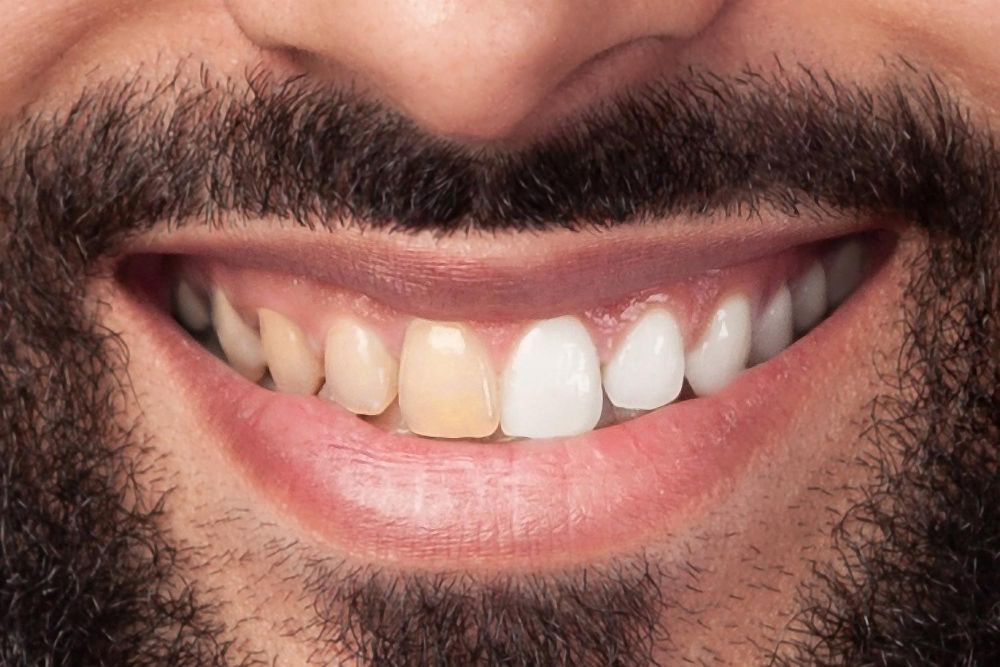
A bright, even smile is one of the first things people notice. So when one or more teeth begin to change colour — turning yellow, grey, brown, or even black — it can affect both your confidence and your oral health. Tooth discoloration is one of the most common dental complaints, yet many people do not fully understand why it happens or what can be done about it.
Whether you are dealing with gradual staining across multiple teeth or you have noticed a single tooth discoloration that appeared seemingly overnight, understanding the cause is the essential first step toward finding the right solution. At Tam Dental in Jeddah, our team of internationally trained specialists — including graduates from Harvard, Boston University, the University of Pennsylvania, and King’s College London — provides comprehensive diagnosis and advanced treatment for all forms of tooth discoloration.
What Is Tooth Discoloration?
Tooth discoloration refers to any change in the natural colour of a tooth. Rather than maintaining a healthy white or off-white appearance, affected teeth may display shades of yellow, brown, grey, or black — either across the surface or within the tooth structure itself.
Clinically, discoloration is categorised into two primary types:
Extrinsic Tooth Discoloration
Extrinsic tooth discoloration affects the outer surface of the tooth — the enamel. It occurs when pigmented substances from food, drink, tobacco, or bacteria accumulate on or within the enamel layer. Because extrinsic stains are located on the surface, they are generally more straightforward to treat. Professional cleaning, polishing, and teeth whitening treatments are often effective.
Intrinsic Tooth Discoloration
Intrinsic discoloration originates from within the tooth structure, affecting the dentin — the layer beneath the enamel. Because enamel is semi-translucent, internal colour changes are visible through it. Intrinsic stains are harder to remove with conventional whitening and often require more advanced restorative approaches such as veneers, crowns, or internal bleaching.
Tooth Discoloration Causes: What Is Making Your Teeth Change Colour?
Understanding tooth discoloration causes is essential for selecting the right treatment. Some causes are lifestyle-related and preventable; others are medical, developmental, or the result of injury.
Dietary Habits and Beverages
Dark-coloured foods and drinks are among the most common drivers of extrinsic tooth discoloration. Coffee, tea, red wine, cola, and richly pigmented sauces all leave chromogenic compounds on the enamel surface. Acidic foods can also erode enamel over time, making the underlying yellow dentin more visible.
Tobacco Use
Smoking and chewing tobacco introduce tar and nicotine into the mouth, both of which are strongly associated with deep, stubborn brown and yellow staining. Tobacco-related staining is extrinsic in origin but can penetrate deeply into enamel, making it resistant to standard whitening products.
Poor Oral Hygiene
When plaque and tartar are not removed through regular brushing and flossing, they accumulate on the tooth surface and create conditions for bacterial pigment deposits. Poor oral hygiene can accelerate both extrinsic staining and, in severe cases, contribute to internal damage. Visiting your dentist every six months for professional cleaning helps prevent this progression.
Ageing
As we age, the outer enamel layer naturally thins through daily wear. At the same time, the inner dentin layer — which is naturally more yellow — thickens. The result is that teeth appear progressively more yellow or grey with age. This form of discoloration is inevitable to some degree but can be managed with professional whitening or restorative treatments.
Medications
Certain antibiotics, particularly tetracycline and doxycycline, can cause intrinsic staining when taken during childhood tooth development. Antihistamines, antipsychotic medications, and antihypertensive drugs have also been associated with discoloration. Excessive fluoride exposure during tooth development — a condition known as dental fluorosis — can cause white spots or brown banding on the enamel.
Dental Materials
Some older dental restorations, particularly those containing silver amalgam, can cast a grey or dark shadow onto the surrounding tooth structure over time. Modern composite resin and ceramic materials used at Tam Dental are colour-matched to your natural teeth, eliminating this risk.
Genetic and Developmental Conditions
Conditions such as amelogenesis imperfecta (affecting enamel formation) and dentinogenesis imperfecta (affecting dentin development) can result in significant discoloration from birth. These are intrinsic conditions that require specialised restorative management.
Single Tooth Discoloration: When One Tooth Changes Colour
While general tooth staining tends to affect multiple teeth simultaneously, single tooth discoloration — where only one tooth darkens — typically points to a specific underlying problem within that individual tooth. This distinction is clinically important because the cause directly determines the treatment.
Common causes of a single discoloured tooth include:
- Internal bleeding following trauma, causing blood pigments to be absorbed into the dentin
- Pulp necrosis (the death of the inner tooth tissue), which causes progressive darkening
- Root canal treatment — if the inside of the tooth is not thoroughly cleaned, residual tissue or bacteria may cause discoloration
- Large, older amalgam fillings that cast a shadow through the remaining tooth structure
- Enamel hypoplasia — a developmental defect resulting in reduced enamel thickness on a specific tooth
A single discoloured tooth warrants prompt evaluation. Unlike surface stains, this type of discoloration often signals internal pathology that, if left untreated, may lead to infection or tooth loss.
Tooth Discoloration After Trauma: Understanding Post-Injury Colour Changes
Tooth discoloration after trauma is a common and often overlooked consequence of dental injuries. Whether from a sports impact, a fall, a car accident, or even biting on something unexpectedly hard, trauma can trigger a chain of internal changes that cause one or more teeth to darken over days, weeks, or months following the incident.
Why Does a Tooth Turn Dark After Injury?
When a tooth experiences a physical impact, several things can happen internally:
- Blood vessels within the pulp rupture, causing internal haemorrhage. Blood pigments are then absorbed into the surrounding dentin, turning the tooth grey, pink, or dark brown — effectively a ‘bruise’ inside the tooth.
- Severe trauma can disrupt the blood supply to the pulp entirely, leading to pulp necrosis. Dead pulpal tissue breaks down over time, releasing compounds that further darken the dentin.
- Micro-fractures in the enamel or dentin allow bacteria and staining compounds to penetrate the tooth structure, causing localised discoloration.
Will the Colour Resolve on Its Own?
In some cases — particularly when the pulp remains vital and blood supply is restored — the discoloration may fade over several months as the body reabsorbs the blood pigments. However, in many cases, especially where pulp necrosis has occurred, the darkening is progressive and permanent without professional intervention. This is why prompt assessment by a dentist is critical after any dental injury, even when there is no immediate pain.
How Long After Trauma Does Discoloration Appear?
Post-traumatic tooth discoloration may appear within days of an injury, or it may develop gradually over weeks to months. The timeline depends on the severity of the trauma, the extent of internal damage, and whether the pulp remains vital. Delayed discoloration — appearing six months or more after an injury — is not uncommon and can still benefit from treatment.
Treatment Options for Tooth Discoloration
The appropriate treatment for tooth discoloration depends on the type (extrinsic versus intrinsic), the severity, the underlying cause, and the specific tooth involved. At Tam Dental, our specialists assess each case individually and recommend the most conservative, effective solution.
Professional Teeth Whitening
For extrinsic tooth discoloration caused by dietary habits, tobacco, or general ageing, professional whitening is often the first-line treatment. Using regulated concentrations of hydrogen peroxide or carbamide peroxide, professional whitening achieves results that over-the-counter products cannot match. Whitening sessions can lighten teeth by several shades and are suitable for both in-clinic and at-home tray protocols.
Internal Bleaching
For single tooth discoloration caused by trauma or pulp necrosis — particularly in teeth that have undergone root canal treatment — internal bleaching is a minimally invasive and highly effective option. A whitening agent is placed directly inside the pulp chamber, lightening the tooth from within. This technique preserves the natural tooth structure and can produce dramatic results, often removing the need for more invasive restorations.
Dental Veneers
Porcelain veneers are thin shells bonded to the front surface of the tooth. They are ideal for teeth with moderate to severe intrinsic discoloration that does not respond to whitening. Veneers cover the stained tooth entirely, restoring its colour and improving its overall shape and size. At Tam Dental, veneers are crafted with precision to blend naturally with your surrounding teeth.
Dental Crowns
When a tooth is both discoloured and structurally compromised — for example, following significant trauma, large restorations, or root canal treatment — a dental crown offers the most comprehensive solution. A crown covers the entire visible portion of the tooth, restoring its strength, function, and appearance simultaneously.
Composite Dental Bonding
Tooth-coloured composite resin can be applied and sculpted directly onto the tooth surface to mask discoloration. Bonding is a fast, cost-effective option for minor intrinsic staining and can typically be completed in a single appointment. While not as durable as veneers or crowns, bonding is an excellent conservative starting point for many patients.
Dental Implants or Replacement
In rare cases where a tooth is severely darkened, non-vital, and structurally unsound — or where previous treatments have failed — extraction and replacement with a dental implant may be the most practical long-term solution. Tam Dental’s implant specialists, including those trained at internationally recognised institutions, ensure seamless aesthetic integration.
Why Choose Tam Dental for Tooth Discoloration Treatment in Jeddah?
Addressing tooth discoloration requires far more than a simple whitening session. It demands accurate diagnosis, an understanding of the tooth’s internal health, and access to a full range of restorative and cosmetic treatments. Tam Dental brings all of this together under one roof in Jeddah.
- Expert Team: Our dentists are trained at some of the world’s leading universities — Harvard, Boston University, King’s College London, the University of Pennsylvania, New York University, and more. Each specialist brings deep, evidence-based expertise in their field.
- Comprehensive Diagnosis: Using advanced imaging and diagnostic technologies, we identify the precise cause and type of discoloration before recommending any treatment — ensuring the right solution for your specific situation.
- Full Range of Treatments: From professional whitening and composite bonding to porcelain veneers, crowns, internal bleaching, and implants, Tam Dental offers every available modality in a single, integrated setting.
- Personalised Care: We believe every patient deserves a tailored treatment plan. Tam Dental is not a budget clinic; it is a premium dental practice where clinical excellence and patient comfort are our primary commitments.
- Patient Comfort: Our clinic environments in the Ash Shati District of Jeddah are designed with your wellbeing in mind — calm, modern, and staffed by professionals who take the time to explain every step of your care.
Preventing Tooth Discoloration: Practical Steps
While not all forms of tooth discoloration can be prevented — particularly those caused by trauma, genetics, or medications — many common types are avoidable with consistent oral hygiene and lifestyle choices.
- Brush and floss twice daily to remove plaque before it accumulates
- Visit your dentist every six months for professional cleaning and check-ups
- Limit consumption of dark-coloured beverages such as coffee, tea, and red wine; use a straw where possible
- Avoid tobacco in all forms — smoking and chewing tobacco are among the leading causes of severe staining
- Rinse your mouth with water after consuming staining foods or drinks
- Wear a mouthguard during contact sports to reduce the risk of dental trauma and subsequent discoloration
Frequently Asked Questions
1. What are the most common tooth discoloration causes?
The most common causes of tooth discoloration include dark-coloured foods and drinks (coffee, tea, red wine), tobacco use, poor oral hygiene leading to plaque build-up, ageing (which thins enamel and reveals yellow dentin), certain medications such as tetracycline antibiotics, and excessive fluoride intake during childhood. Trauma and root canal treatment can also cause a single tooth to darken due to internal changes within the pulp and dentin.
2. What causes single tooth discoloration?
Single tooth discoloration — where only one tooth changes colour — is most commonly caused by dental trauma that ruptures blood vessels inside the tooth, pulp necrosis (death of the tooth’s inner tissue), residual material following root canal treatment, or an older amalgam filling casting a shadow. Unlike general staining, a single discoloured tooth often indicates internal pathology and should be assessed by a dentist promptly to rule out infection or structural compromise.
3. Does tooth discoloration after trauma go away on its own?
In some cases, particularly when the tooth pulp remains vital and blood supply recovers, discoloration after trauma may resolve naturally over several months as blood pigments are reabsorbed. However, when pulp necrosis has occurred, the darkening is typically permanent without treatment. Because it is difficult to predict the outcome without professional assessment, any post-traumatic colour change should be evaluated by a dentist as soon as possible.
4. What is the difference between extrinsic and intrinsic tooth discoloration?
Extrinsic tooth discoloration affects the outer enamel surface and is typically caused by staining foods, drinks, and tobacco. It is generally more straightforward to treat with professional cleaning and whitening. Intrinsic tooth discoloration originates within the tooth structure — in the dentin or even deeper — and is often caused by trauma, medications, developmental conditions, or ageing. Intrinsic stains are harder to remove and may require veneers, crowns, or internal bleaching for effective correction.
5. When should I visit a dentist for tooth discoloration?
You should visit your dentist if you notice discoloration that has appeared suddenly, if a single tooth has darkened without obvious cause, if whitening treatments are not producing results, or if discoloration is accompanied by sensitivity, pain, or swelling. Discoloration following any dental injury — even one that seemed minor — should be assessed promptly. Early intervention typically results in simpler, less invasive treatment.
Book Your Consultation at Tam Dental, Jeddah
If you are concerned about tooth discoloration — whether a gradual yellowing, a single dark tooth, or changes following dental trauma — the specialist team at Tam Dental is here to help. We offer accurate diagnosis and a full range of treatments tailored to your individual needs.
Contact Tam Dental Today
📍 Ash Shati District, Sari St. Branch — Jeddah 23415, Saudi Arabia
📍 King Abdul Aziz Rd, Ash Shati — Jeddah 23412, Saudi Arabia
📞 +966 920033363
📧 info@tamdental.sa
🌐 tamdental.sa/en/contact-us/
Sources
The following authoritative sources informed the content of this article:
- American Dental Association (ADA) — ada.org
- National Institutes of Health (NIH) / PubMed — nih.gov, pubmed.ncbi.nlm.nih.gov
- Cleveland Clinic — clevelandclinic.org
- NHS (National Health Service, UK) — nhs.uk
- Mayo Clinic — mayoclinic.org
- Saudi Commission for Health Specialties — scfhs.org.sa
- Saudi Ministry of Health — moh.gov.sa