Consultant-led care for bleeding, swollen and receding gums, from a first cleaning to gum surgery.
Gum disease is an infection of the tissues that hold your teeth in place. It usually starts when plaque, a sticky film of bacteria, is left on the teeth and hardens into tartar.¹ In its early stage it can be reversed. Left alone, it can reach the bone that supports the teeth, and teeth can loosen or be lost.¹
Gum disease treatment at Tam Dental starts with one question: how far has it gone? The answer decides whether you need a professional cleaning, a deep cleaning, or care from a periodontist.
Early signs of gum disease
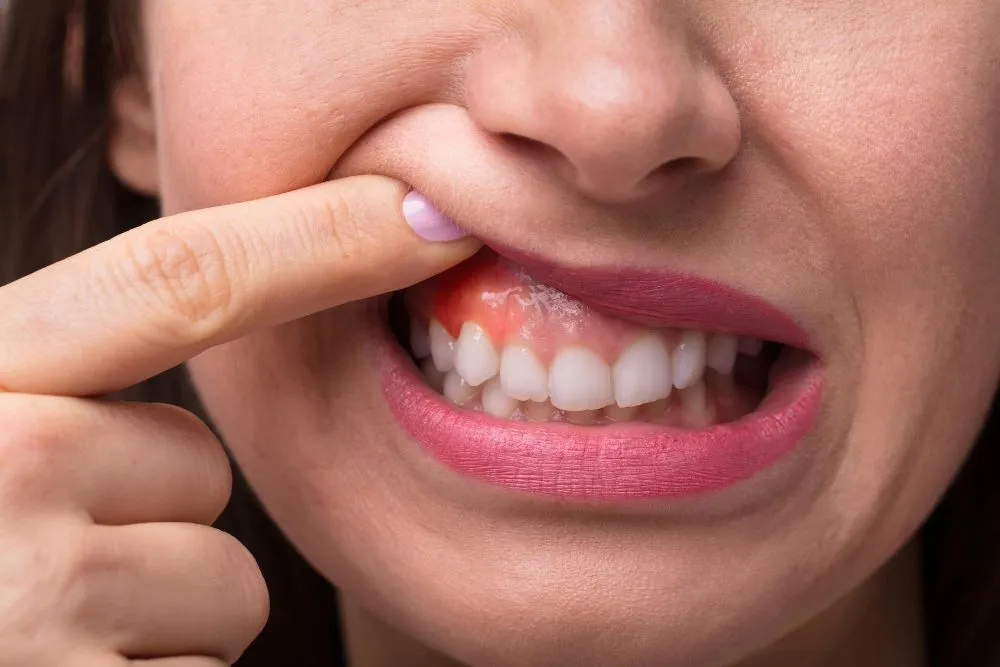
Gum disease can be present with no warning signs at all, which is why regular check-ups matter.² When signs do appear, the early ones are:²
- gums that are red or swollen
- gums that bleed easily when you brush or floss
As the disease advances, teeth can start to feel loose or shift position.²
If you have noticed any of these, book an examination. Bleeding that keeps coming back is a reason to be seen, even when nothing hurts.
Gum disease stages
| Stage | What is happening | Can it be reversed? |
|---|---|---|
| Gingivitis | Gums are red, swollen and bleed easily. No bone has been lost. | Yes. It can usually be cleared with a professional cleaning followed by daily brushing and flossing.² |
| Periodontitis | The tissue and bone that support the teeth are being lost. Teeth may loosen and move.² | No. The damage is controlled and maintained, not undone. |
Gum disease causes
Plaque that is not removed every day hardens into tartar, and only a professional cleaning can remove tartar. The bacteria in plaque and tartar trigger inflammation that damages the gums and the tissues around the teeth.¹
Some things raise the risk:¹
- smoking or using tobacco, the most significant risk factor
- diabetes
- older age and family history
- hormonal changes in girls and women
- stress, and some illnesses and the medicines used to treat them
Tell your dentist if any of these apply to you. They change how often you should be seen.
How we treat gum disease
1. Examination and measurement
The periodontist examines your gums, measures the depth of the pockets around each tooth, and takes X-rays to see whether bone has been lost. This is what tells gingivitis from periodontitis.
2. Professional cleaning
For gingivitis, removing plaque and tartar above the gum line is often enough, as long as daily brushing and flossing follow.²
3. Deep cleaning (scaling and root planing)
For periodontitis, the dentist cleans below the gum line and smooths the root surfaces so the gums can heal against the tooth.¹ It is done under local anaesthetic. Our guide to deep cleaning teeth explains what the appointment involves.
4. Medication
Your dentist may prescribe a medicated mouth rinse alongside the cleaning, and will show you how best to clean your teeth and gums at home.¹
5. Gum surgery
Advanced cases can need surgical treatment by a periodontist, for example to reach deep pockets or to rebuild lost tissue. Your periodontist explains why it is recommended and what the alternatives are before anything is booked.
6. Maintenance
Periodontitis is managed over the long term. After treatment you return for regular maintenance visits, at an interval your periodontist sets for you.
Bleeding gums treatment
Bleeding is most often caused by gingivitis. Treatment is a professional cleaning and better daily cleaning at home. Brushing more gently does not solve it; removing the plaque does. If bleeding continues after a cleaning, the pockets need measuring.
Swollen gums treatment
Swelling across the gums usually points to plaque and tartar. Swelling in one spot, especially with pain or a bad taste, can be a gum infection and should be seen quickly.
Gum infection treatment
A localised gum infection is treated by cleaning the infected area, draining it where needed, and treating the gum disease behind it. Antibiotics are sometimes prescribed, but they do not replace the cleaning.
What to expect after treatment
Gums can feel tender for a few days after a deep cleaning, and teeth may be sensitive to cold for a while. As the swelling settles, gums tighten around the teeth and bleeding reduces. Your periodontist reviews the pockets again a few weeks later to check the response.
What affects the cost of gum disease treatment
There is no single price, because the treatment depends on the stage. The cost depends on:
- whether you need a routine cleaning or a deep cleaning
- how many areas of the mouth are involved
- whether surgery is needed
- the number of maintenance visits afterwards
You are given the plan and its cost after the examination, before treatment starts.
Gum disease and other dental treatment
Gum disease is treated before cosmetic or implant work. Veneers, crowns and implants placed on unhealthy gums do not last as they should. We cover this in Can you get veneers or implants with gum disease?
Why Tam Dental for gum treatment
- Consultant periodontists trained at universities including Harvard, the University of Pennsylvania, Case Western Reserve University and the University at Buffalo.
- More than 15 years of practice in Jeddah and more than 5,000 patients.
- Periodontists, prosthodontists and implant surgeons in one clinic, so gum treatment and any later restorative work are planned together.
- An English-speaking team.
For the wider picture of gum problems and when to see a specialist, read Gum Treatment in Jeddah.
FAQ
Can gum disease be cured?
Gingivitis can usually be reversed with a professional cleaning and daily brushing and flossing.² Periodontitis cannot be undone, but it can be controlled with treatment and regular maintenance.
Can gum disease be cured?
Gingivitis can usually be reversed with a professional cleaning and daily brushing and flossing.² Periodontitis cannot be undone, but it can be controlled with treatment and regular maintenance.
Is gum disease treatment painful?
Deep cleaning and gum surgery are done under local anaesthetic. Tenderness for a few days afterwards is common.
How do I know which stage I have?
You cannot tell from symptoms alone. The stage is set by measuring the gum pockets and checking X-rays for bone loss.
Will my gums grow back?
Gums that have receded do not grow back on their own. A periodontist can advise whether a gum graft would help in your case.
How often should I have my gums checked?
At your routine dental check-ups. If you have had periodontitis, your periodontist sets a shorter interval.
Does smoking affect gum disease treatment?
Yes. Tobacco use is the most significant risk factor for gum disease.¹ Tell your periodontist if you smoke.
CTA
Book an online consultation with a discount, call 920033363, or visit us in Ash Shati, Jeddah.
Medically reviewed by: Dr. Ahmed Alghamdi, Consultant in Periodontics and Implant Dentistry (Case Western Reserve University; Fellow of the Royal College of Dentists of Canada).
Sources
- National Institute of Dental and Craniofacial Research (NIH) — Periodontal (Gum) Disease — https://www.nidcr.nih.gov/health-info/gum-disease
- American Dental Association, MouthHealthy — Gum Disease (Periodontal Disease) — https://www.mouthhealthy.org/all-topics-a-z/gum-disease